|
HOME - More Research
An All-Weather Portfolio Using Multiple Asset ClassesMarch 8, 2007
Andrew Carnegie (1835-1919) This article is part of a continuing series on asset allocation, which explores the potential benefits of investing a wide variety of asset classes beyond simply stocks and bonds. The multiple asset class approach to investing attempts to minimize the probability of incurring significant and prolonged portfolio losses.
In the world of investing, Mr. Carnegie might have said, "watch the losses and the profits will take care of themselves". As mentioned in a timely article dated December 29, 2006, False Diversification May Prove Costly In 2007, long bull markets often cause us to forget about the benefits of true asset class diversification. To illustrate the concept of false diversification, we studied a hypothetical portfolio made up of 12 different mutual funds and ETFs, which declined by 42.49% during the last bear market in U.S. stocks (2000-2002). Considering the S&P 500 declined by 46.34% in the same period, our hypothetical growth investor did not have a truly diversified portfolio due to positive investment and asset class correlations.
Understanding Asset Class Correlations If one of your primary objectives is to produce positive investment returns while having a low probability of incurring losses in a reasonable time frame, you must first understand how different asset classes behave in different economic and financial market environments. Asset class performance during the 2000-2002 bear market is covered in Upgrading Your Asset Allocation For 2007. Figure 1 shows the performance of the dividend-reinvested S&P 500 index from 1995-2006. When attempting to reduce portfolio volatility, it is helpful to identify asset classes or hedging strategies which performed well during the periods of weakness in U.S. stocks (shown by the blue circles below).
Figure 1 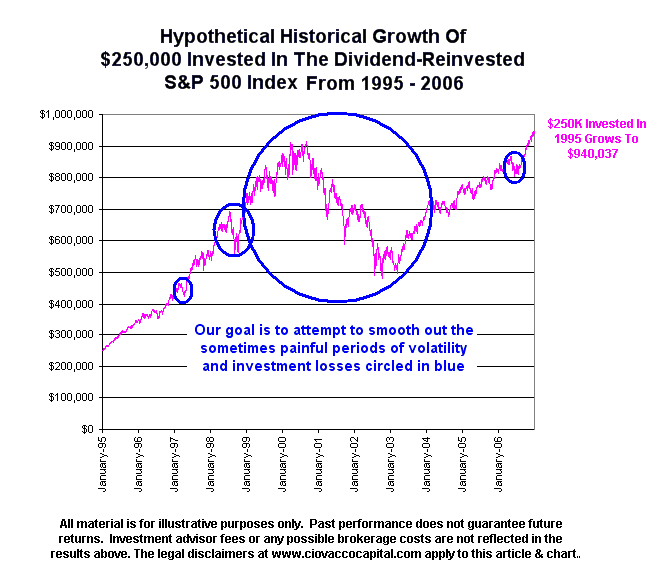
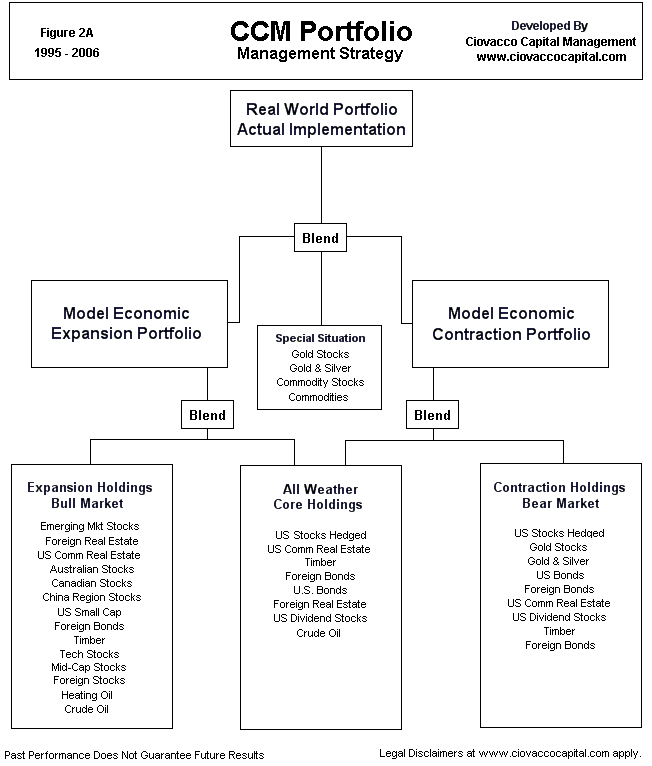
Figure 3
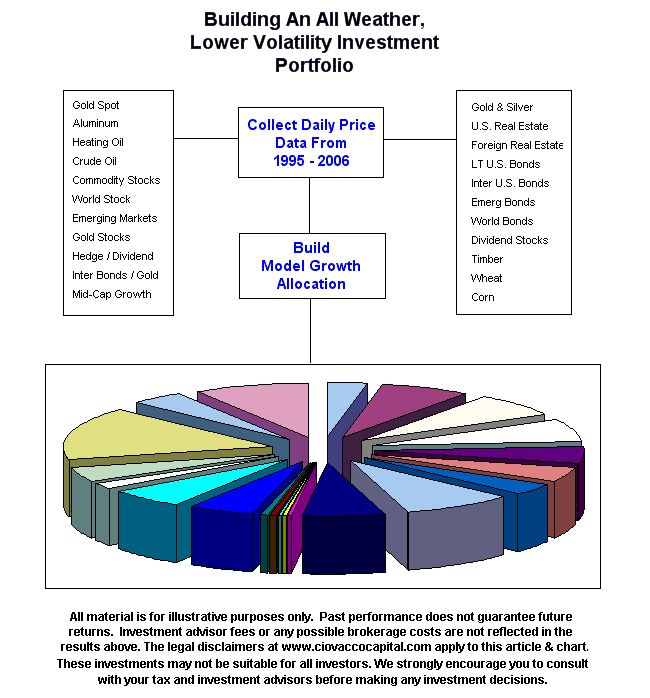
Figure 4
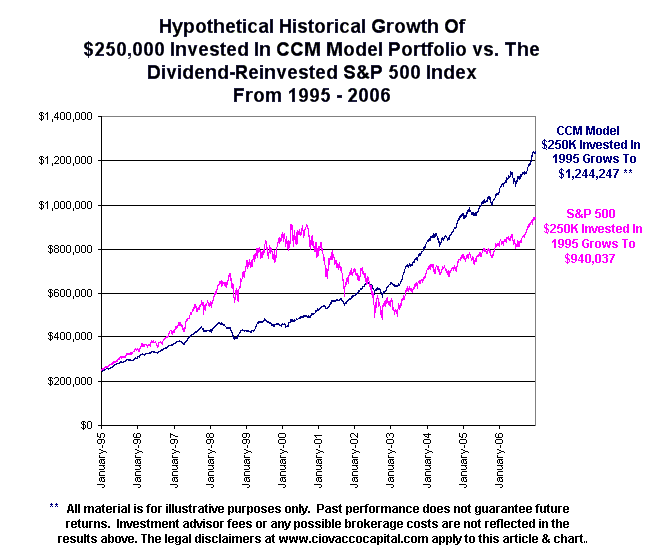
Obviously, the next bear market and subsequent bull market in U.S. stocks will be different from the most recent cycles. The strategy we are building was developed with a respect for Mark Twain's way of looking at history: he stated,
The future will not be exactly the same as the past, but there will be meaningful similarities. This strategy is based primarily on how asset classes, not individual stocks, performed under different economic and market conditions. This should make the results more relevant than if we studied how Microsoft's stock performed under the same conditions since individual stocks can be influenced by company specific outcomes (earnings disappointments, fraud, credit ratings, analyst recommendations, etc). A common criticism of any study of historical asset class correlations is to point out that none of us know which asset classes will be the winners in the future. While that criticism does hold water, many of the asset class correlations presented here should remain relevant in future economic cycles. For example, the odds are extremely high that bonds will be more desirable in an environment where the Federal Reserve is lowering interest rates (the Federal Funds Rate). Conversely, in the future, the odds are good that bonds will be less attractive under conditions where the Federal Reserve is raising interest rates. The odds are also reasonable that commodities will be more attractive in periods of economic expansion and they will be less attractive in periods of economic contraction. Is multiple asset class investing the cure for all your investment worries? We all know that no such cure exists. However, research shows that there may be a better way to build a portfolio of investments that offers real diversification and an opportunity for improved returns. In an effort to better prepare for 2007 and beyond, I recently conducted some extensive research on the potential benefits of investing in a wide array of asset classes, including some with low or negative correlations to U.S. stocks. Since the study, Protecting Your Wealth From Inflation And Investment Losses, is rather lengthy, I will continue to summarize what the historical numbers tell us in future articles. While there are several ways to successfully approach the investment markets, I feel we can all gain some advantage from reviewing how different asset classes performed in both bull and bear markets. As time permits, I will continue to expand on these topics in the coming weeks.
Chris Ciovacco
All material presented herein is believed to be reliable but we cannot attest to its accuracy. Investment recommendations may change and readers are urged to check with their investment counselors and tax advisors before making any investment decisions. Opinions expressed in these reports may change without prior notice. This memorandum is based on information available to the public. No representation is made that it is accurate or complete. This memorandum is not an offer to buy or sell or a solicitation of an offer to buy or sell the securities mentioned. The investments discussed or recommended in this report may be unsuitable for investors depending on their specific investment objectives and financial position. Past performance is not necessarily a guide to future performance. The price or value of the investments to which this report relates, either directly or indirectly, may fall or rise against the interest of investors. All prices and yields contained in this report are subject to change without notice. This information is based on hypothetical assumptions and is intended for illustrative purposes only. THERE ARE NO WARRANTIES, EXPRESSED OR IMPLIED, AS TO ACCURACY, COMPLETENESS, OR RESULTS OBTAINED FROM ANY INFORMATION CONTAINED IN THIS ARTICLE. PAST PERFORMANCE DOES NOT GUARANTEE FUTURE RESULTS.
Potentially impacted stocks and ETFs: SPY, IYR, RWR, ICF, RWX, AWF, VDE, XLE, DGT, EEM, VBR, GSG, IEF, TLT, DVY, GLD, SLV.
TOPIC: Building An All Weather Investment Portfolio |