Credit Cycles: Tracking Longer-Term Inflation ExpectationsBy Chris CiovaccoCiovacco Capital Management December 15, 2008
Below are historical examples (from 2008) of how to use technical analysis in economic forecasting and monitoring Fed polices. When the Fed attempts to reinflate the money supply, there are typical patterns in credit and monetary policy cycles, which can be seen in the price and technical action of gold, the U.S. dollar, oil, TIPS, and gold stocks. These assets can be used to monitor the shift from deflation to inflation. We will also cover strategies for principal preservation and purchasing power preservation. More research can be found on our home page.
Gold Stocks May Signal ShiftAs stated in our last update, countless government bailouts and liquidity facilities have flooded the financial system with new funds. It is almost universally accepted these practices will be inflationary once the economy and credit markets find some footing. Therefore, it is logical to assume assets that can help protect purchasing power would be in demand if we were on the cusp of an economic recovery. A similar situation occurred during the 2000-2002 bear market in stocks (the Fed lowered rates and encouraged borrowing). The chart below shows when inflation-related asset classes found a bottom in the 2000-2002 bear market.
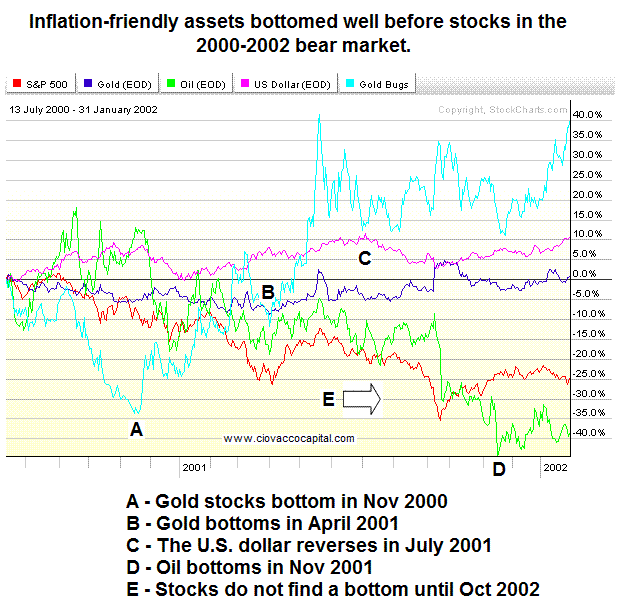 Note: The bottom in the S&P 500 (point E / red line) is not shown above - it occurs in late 2002.
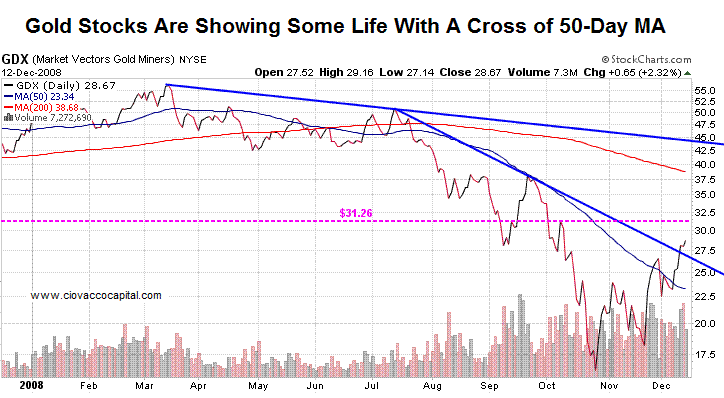
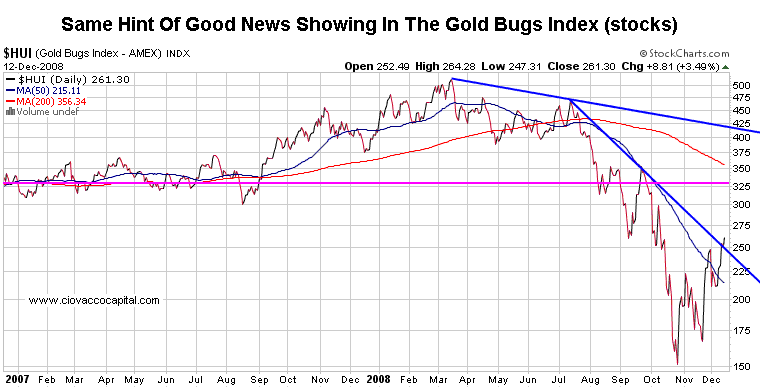
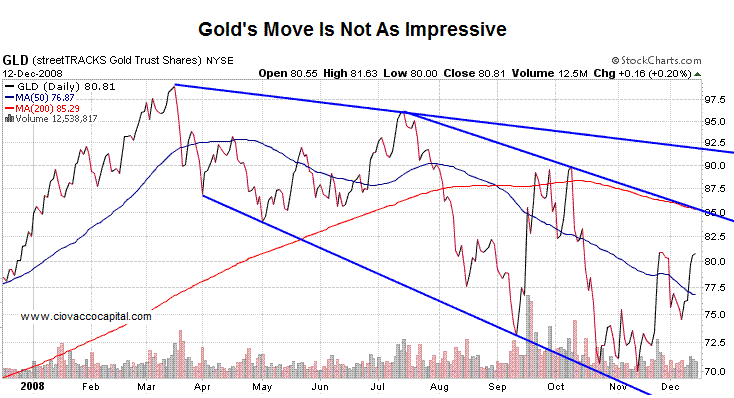
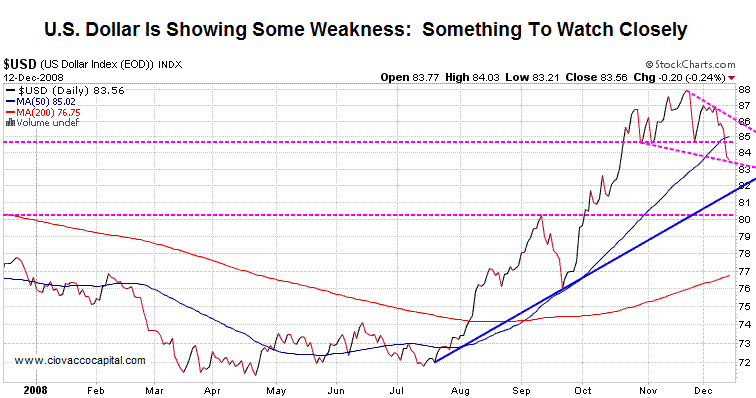
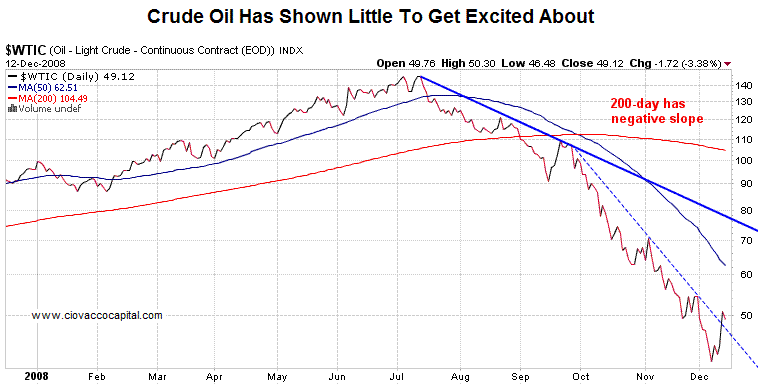
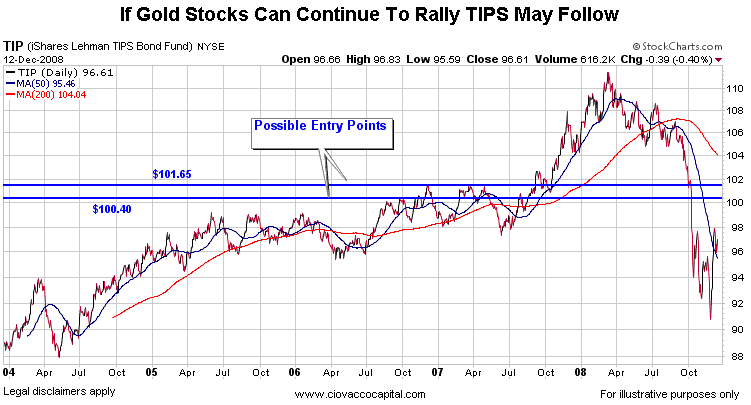
Concerns Will Shift From Deflation to InflationWhen the shift in inflationary/deflationary perceptions will occur is the pivotal question for investors. The recent moves in gold stocks and the dollar may be indicative of the early stages of rising concerns about inflation. Concerns about deflation still are in the forefront of investors' minds. Therefore, we must continue to keep an open mind and plan for intermediate-term outcomes that favor deflation or inflation. Investment grade corporate bonds may help us with the deflationary side of the ledger.
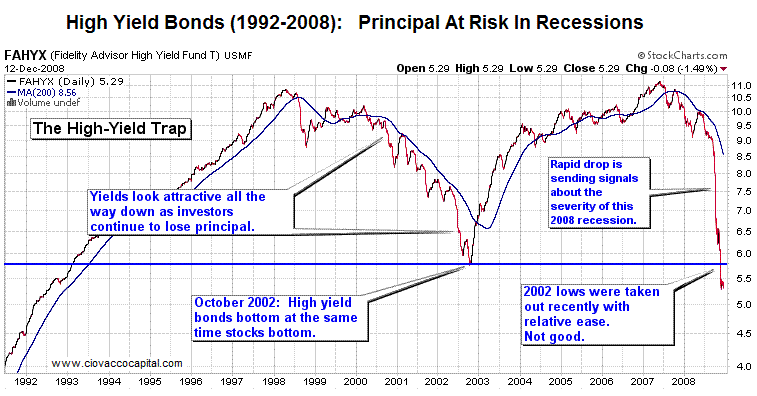
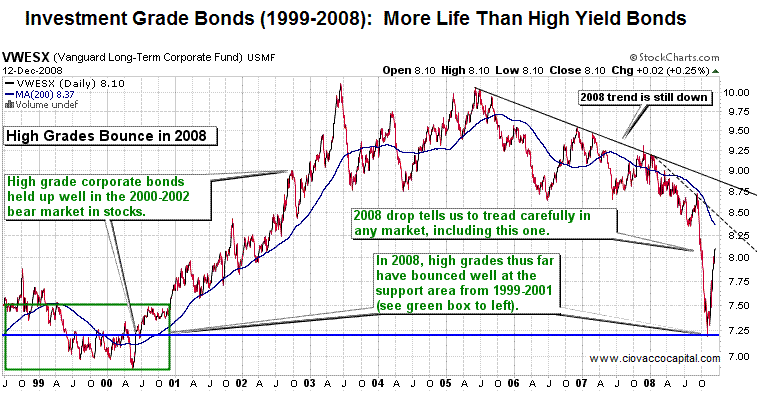
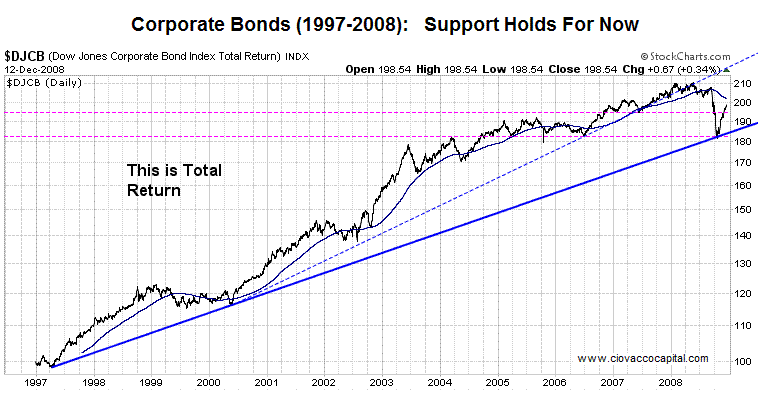
Reasons to consider high-grade corporate bonds:
LQD is an exchange traded fund (ETF) that owns a diversified collection of investment grade (a.k.a. high-grade) bonds. LQD is paying approximately 5.8%. Bonds in the portfolio include those from Abbott Labs, IBM, Johnson & Johnson, Pepsico, UPS, and Wal-Mart.
Why have we been buying short-maturity CDs in recent months yielding between 2-3% when you can get some corporate bonds that pay between 10-20%?
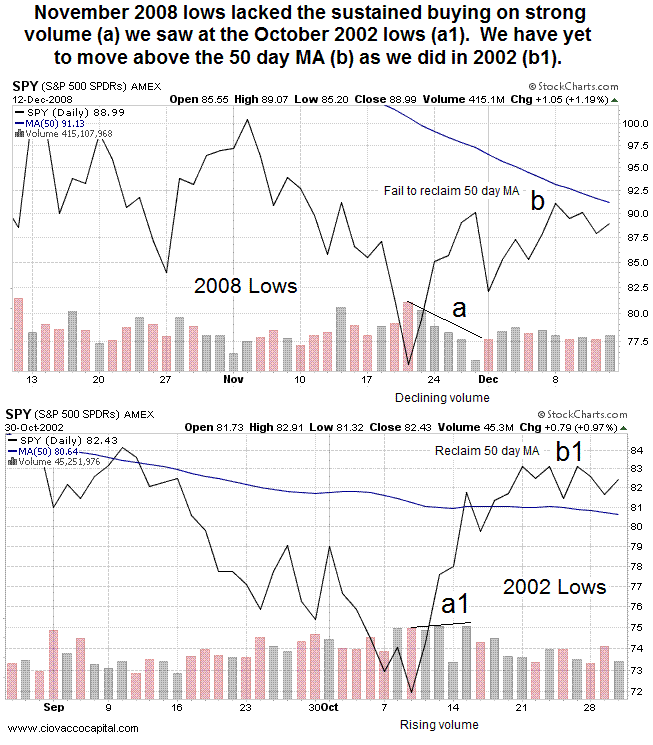
The Fed is almost certain to lower interest rates on Tuesday of this week (12/16/09). The cuts will put the Fed's benchmark rate between 0.25% and 0.50%. CD rates will fall first, then money markets. Fortunately, we still have numerous CDs on the books paying between 4-5%. During the last radical cutting cycle by the Fed, the Schwab Money Market Fund hit a low yield of 0.35% in April of 2004. Demand for government Treasury bonds was so high at last week's auctions investors were willing to accept a 0%, or even negative, return. There are two primary reasons for this: (1) fear and legitimate concern over the economic outlook, and (2) large institutions have limited options in terms of finding safe places for cash. As individual investors, we can use FDIC insured CDs (1-12 months) to get a positive return and safety of principal. A large institution will exceed FDIC limits rapidly, which makes even 0% Treasuries attractive in uncertain times. When fear levels start to decline and credit markets show even some moderate improvement, we can expect to see a rush out of Treasury bonds. Yields will rise and prices will fall rapidly. For now, we must respect the negative signals about the economic outlook a 0% Treasury is sending. Due to rapidly declining rates of return, CD and money market investors will soon be looking for alternatives. Since Treasury bonds are in a mini bubble and pay low rates of return, the next logical step may be for investors to look at high-grade corporate bonds. High-grade bonds are issued by more stable and better capitalized companies.
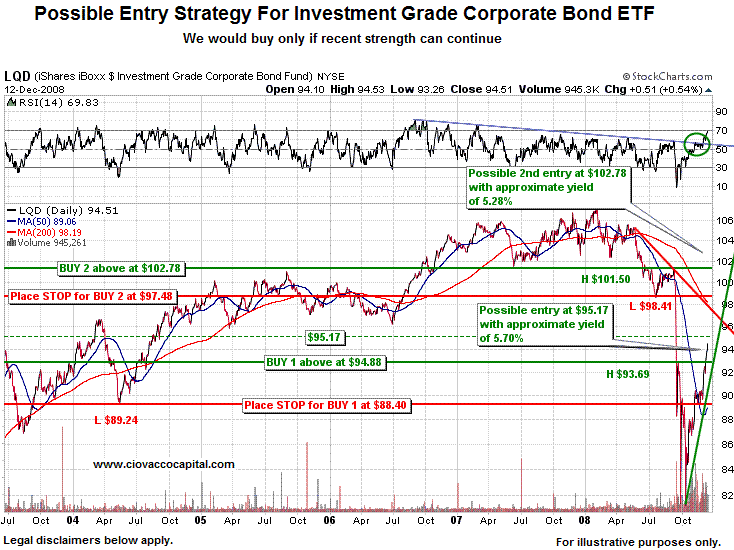
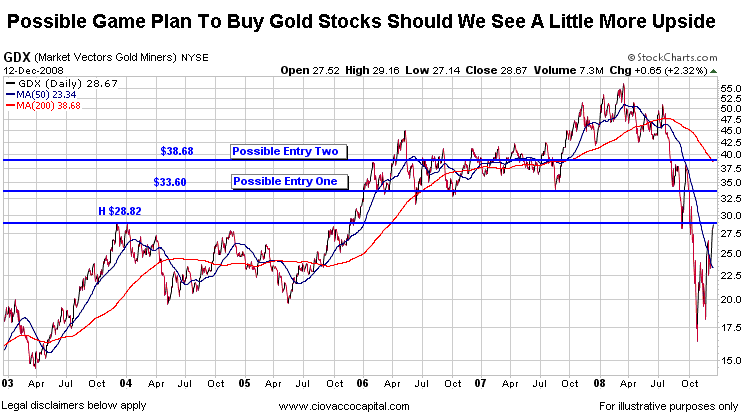
Plans for Both Principal Protection and Purchasing Power ProtectionPrincipal protection is our primary focus as long as deflation remains the primary concern of investors. We must also have plans for the almost certain shift to concerns about inflation. Gold stocks (GDX) and TIPs (TIP) can help us if inflationary expectations rise. If deflation concerns continue without much competition from inflation, investment grade corporate bonds (LQD) may offer an alternative to falling CD and money market rates. The relative movements of the deflationary and inflationary assets will help guide us along the way.
Chris Ciovacco is the Chief Investment Officer for Ciovacco Capital Management, LLC. More on the web at www.ciovaccocapital.com All material presented herein is believed to be reliable but we cannot attest to its accuracy. The information contained herein (including historical prices or values) has been obtained from sources that Ciovacco Capital Management (CCM) considers to be reliable; however, CCM makes any representation as to, or accepts any responsibility or liability for, the accuracy or completeness of the information contained herein or any decision made or action taken by you or any third party in reliance upon the data. Some results are derived using historical estimations from available data. Investment recommendations may change and readers are urged to check with tax advisors before making any investment decisions. Opinions expressed in these reports may change without prior notice. This memorandum is based on information available to the public. No representation is made that it is accurate or complete. This memorandum is not an offer to buy or sell or a solicitation of an offer to buy or sell the securities mentioned. The investments discussed or recommended in this report may be unsuitable for investors depending on their specific investment objectives and financial position. Past performance is not necessarily a guide to future performance. The price or value of the investments to which this report relates, either directly or indirectly, may fall or rise against the interest of investors. All prices and yields contained in this report are subject to change without notice. This information is based on hypothetical assumptions and is intended for illustrative purposes only. PAST PERFORMANCE DOES NOT GUARANTEE FUTURE RESULTS.
|
