Principal Protection Has Moved To ForefrontBy Chris Ciovacco Ciovacco Capital Management August 17, 2008 Stocks Remain in DowntrendThe S&P 500 Index remains 17.63% below its 2007 high. As the blue lines in the chart below illustrate, despite a month of gains, the primary trend in stocks is still firmly down. A downtrend means if you are betting or hoping that stocks have bottomed, you are swimming upstream with the odds stacked against you. Those odds may change, but as of now there is no credible evidence to support a bullish bet yet on stocks.
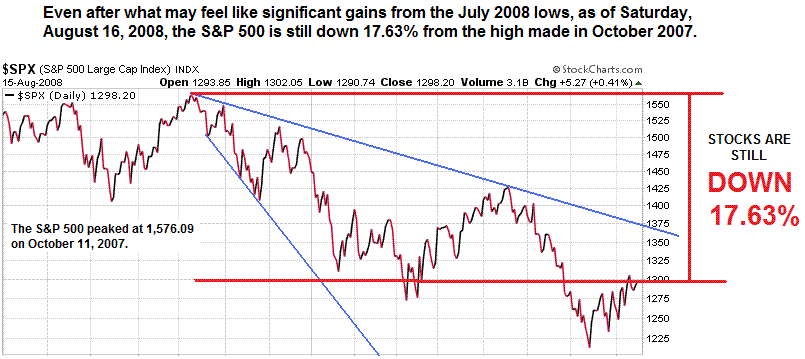
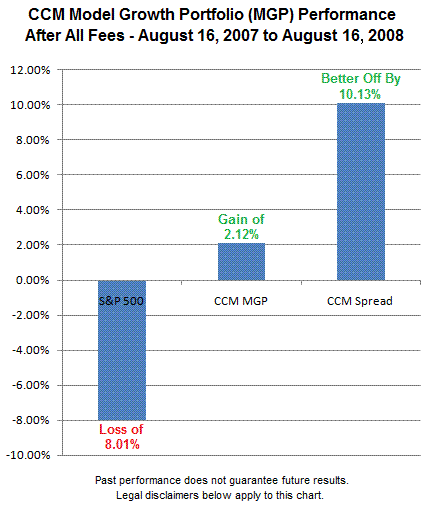
One Month of Discomfort vs. Ten Months of DiscomfortStocks peaked on October 9, 2007, a little over ten months ago. If your neighbor is a typical investor, he has been uncomfortable for ten months. We have been fortunate to only experience high levels of discomfort for one month. We recently cut back significantly on the positions that have caused the most pain in the last month to preserve our principal and to protect our positive spread vs. U.S. stocks. While it does not feel that way, as the chart below shows, we have still performed quite well in the past year relative to stocks.
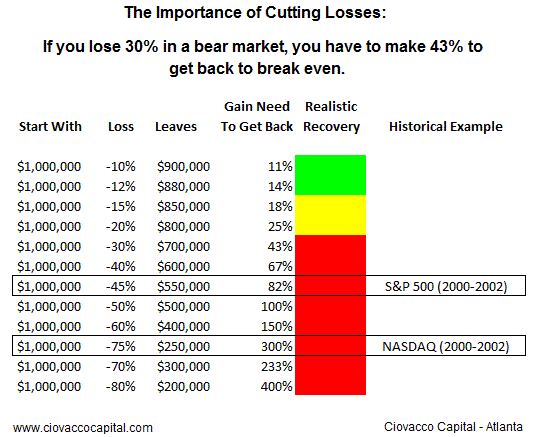
At Some Point Nothing Else Matters Except Protecting PrincipalWhen asked their secrets of success, money managers who consistently have been top performers almost without exception state the importance of "cutting losses and letting winners run." Similarly, when the best professional managers are asked to name common mistakes made by individual investors, they typically put the failure to cut losses at the top of the list. The cruel reality of the markets is when you lose 30% you need to make more than 30% to get back to break even. As the chart below shows, if you lose 30%, you need to make 43% to get back to break even. The two boxed rows show the danger of "staying the course" while bear markets destroy your hard earned principal. If you "rode out" the 2000-2002 bear market in the S&P 500 Index, your losses from peak to trough would have been roughly 45%. To get back to break even, you would have needed to earn an 82% return from the bottom which was made in October of 2002. When losses begin to pile up, at some point you have to put both the fundamentals and charts on the back burner and focus on preserving principal in order to have the opportunity to fight another day.
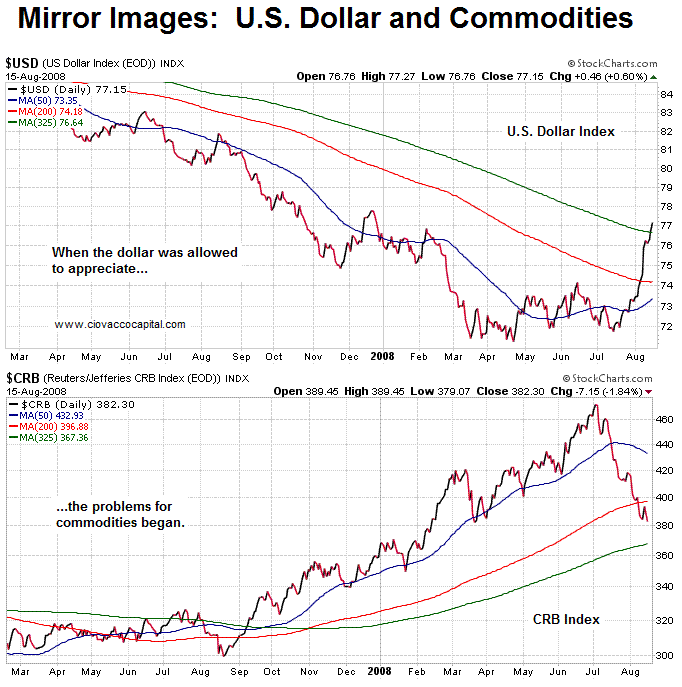
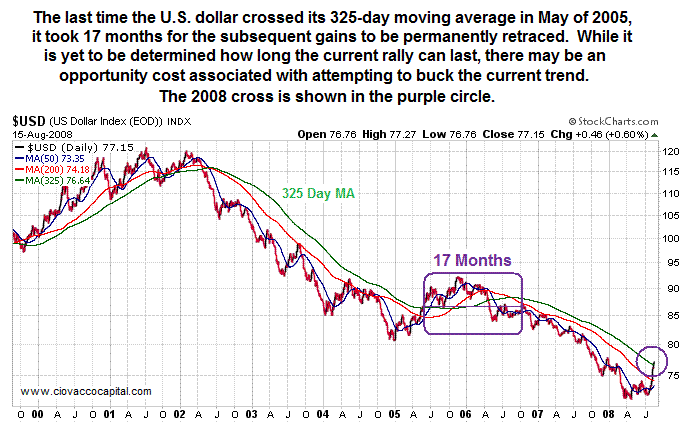
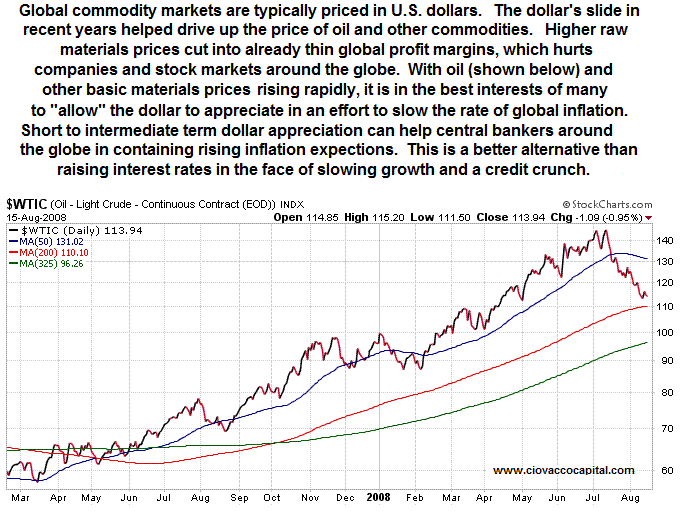
What Happened In The Last Month?Commodities have rapidly reversed course and the dollar has made a countertrend move the likes of have not been seen for almost 40 years. Regardless of where markets head from here, the magnitude of the moves have pushed principal protection to the forefront. The charts below show both the dollar and commodities from March 2007 to the present. Note in the dollar chart, the 200-day moving average (MA), shown in red, and the 325-day MA (in green) have not been even seriously tested until now.
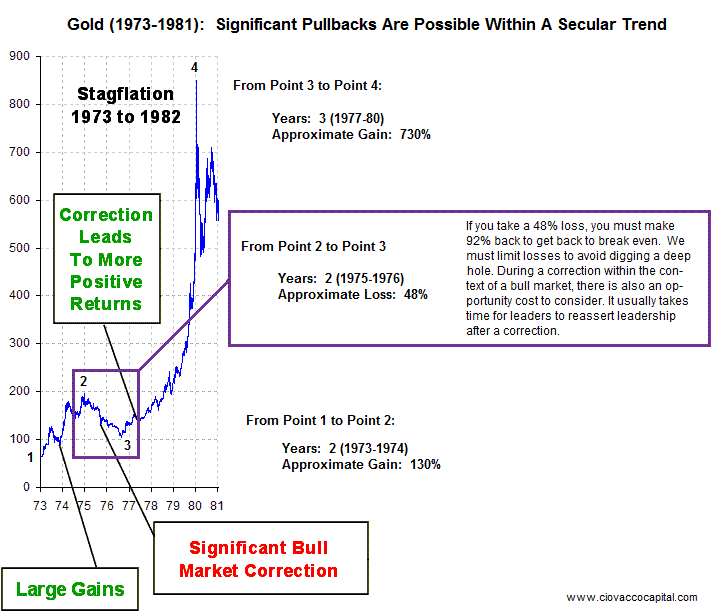
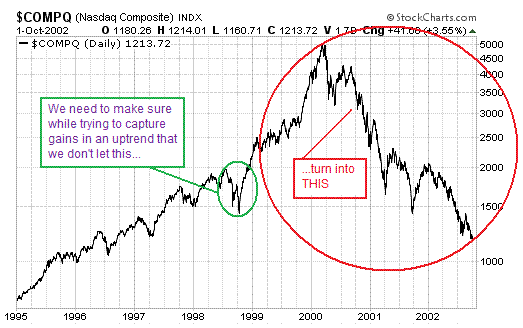
Secular and Cyclical TrendsThe long-term story for a weak dollar remains intact. The long-term story for strength in commodities remains intact. These stories (or fundamentals) apply to a period that could last almost twenty years and are referred to as secular stories or trends. Based on history, it is important to understand that counter-trends or cyclical retracements of secular trends can be of significant magnitude and duration. More importantly, they can destroy principal even when you have correctly identified the long-term fundamentals. The chart below of gold prices from 1973 through 1981 illustrates the point. Even if you have the story right, are you willing and emotionally able to suffer a 48% loss in a core position?
The Dollar Has Been 'Allowed' to MoveMohamed El-Erian is the former highly successful manager of the Harvard endowment and current head of PIMCO. In an August 15, 2008 Bloomberg interview, he makes some comments which may help us to begin to understand the recent surge in the dollar in the face of less-than-ideal U.S. economic conditions.
My interpretation of his comments:
We would be remiss if we did not mention the obvious importance in the currency markets of slowing of growth in Europe and the possible impact on interest rate differentials between the dollar and euro.
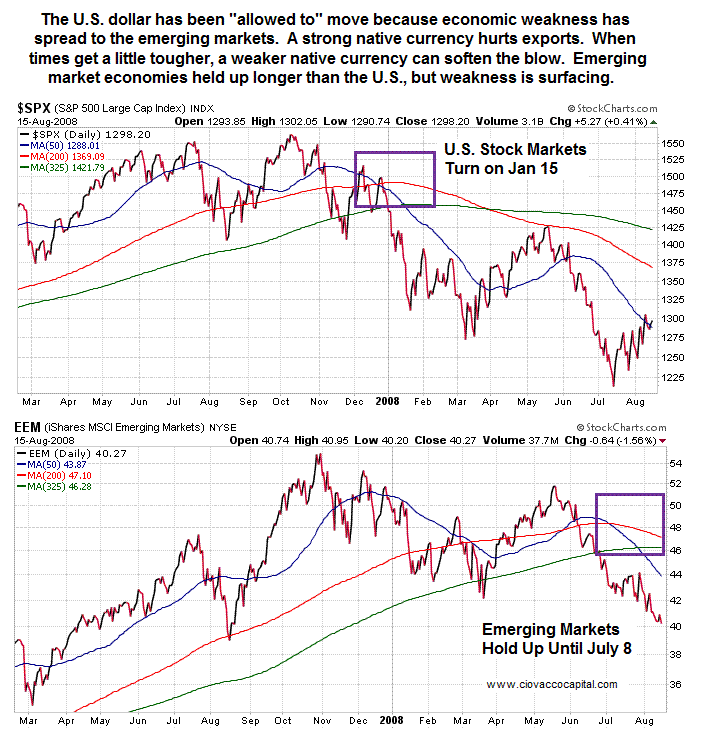
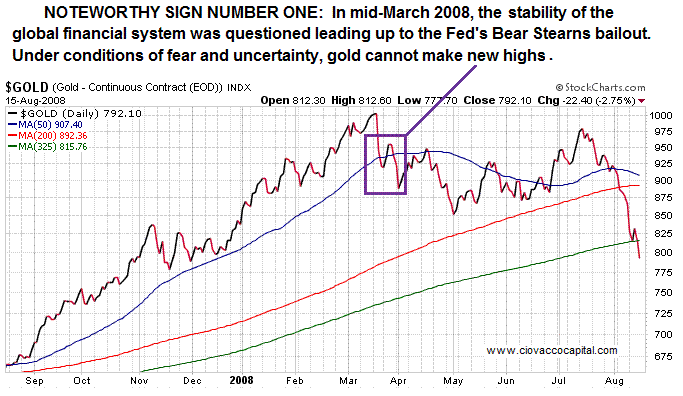
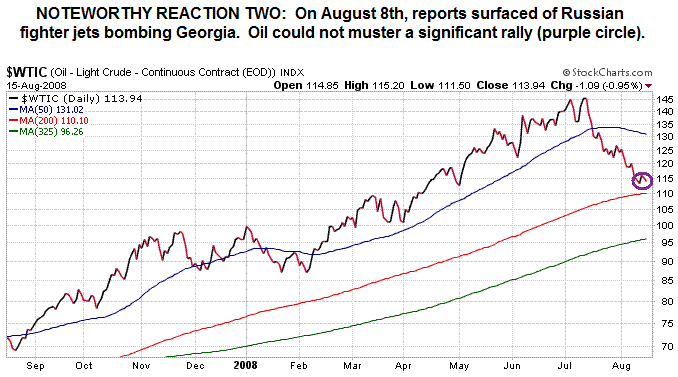
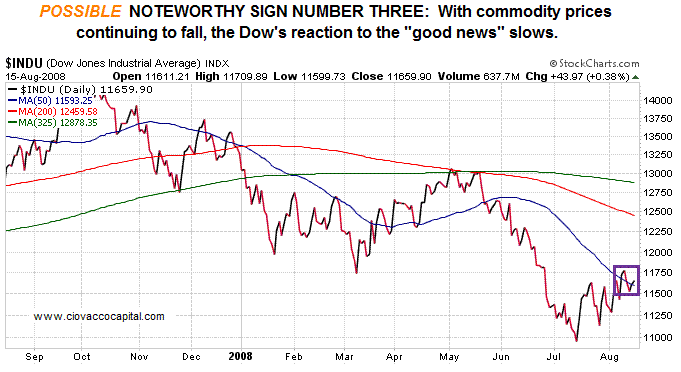
When Fundamentals and Technicals Fail to AlignMy read-between-the-lines of the current economic environment includes:
All material presented herein is believed to be reliable but we cannot attest to its accuracy. The information contained herein (including historical prices or values) has been obtained from sources that Ciovacco Capital Management (CCM) considers to be reliable; however, CCM makes any representation as to, or accepts any responsibility or liability for, the accuracy or completeness of the information contained herein or any decision made or action taken by you or any third party in reliance upon the data. Some results are derived using historical estimations from available data. Investment recommendations may change and readers are urged to check with tax advisors before making any investment decisions. Opinions expressed in these reports may change without prior notice. This memorandum is based on information available to the public. No representation is made that it is accurate or complete. This memorandum is not an offer to buy or sell or a solicitation of an offer to buy or sell the securities mentioned. The investments discussed or recommended in this report may be unsuitable for investors depending on their specific investment objectives and financial position. Past performance is not necessarily a guide to future performance. The price or value of the investments to which this report relates, either directly or indirectly, may fall or rise against the interest of investors. All prices and yields contained in this report are subject to change without notice. This information is based on hypothetical assumptions and is intended for illustrative purposes only. PAST PERFORMANCE DOES NOT GUARANTEE FUTURE RESULTS.
|
